

POTS and Dysautonomia: A Complete Guide to Diagnosis and Treatment
Postural Orthostatic Tachycardia Syndrome, POTS, and dysautonomia more broadly, remain under-recognized and under-resourced conditions across much of Tennessee. Many patients travel hours or wait months (or even years in some cases) to be evaluated by a specialist. This guide is meant to lay out, clearly and based on current evidence, what these conditions are, how they're diagnosed, and what treatment actually involves.
What is dysautonomia, and where does POTS fit in?
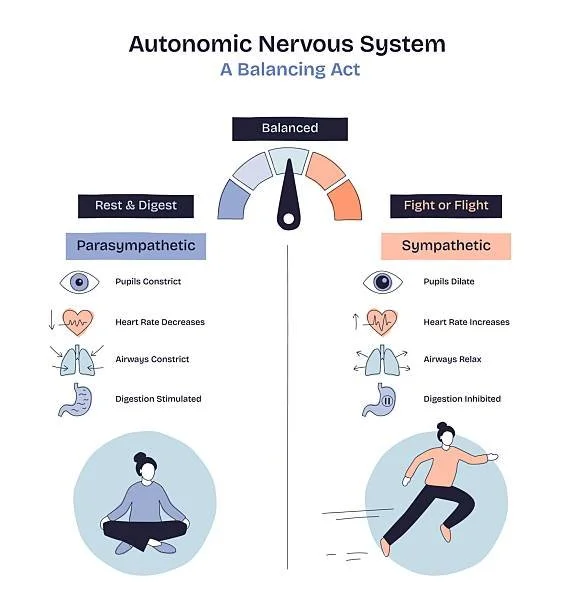
Dysautonomia refers to dysfunction of the autonomic nervous system, the system responsible for regulating heart rate, blood pressure, digestion, temperature control, and other functions outside conscious control. POTS is one of the most common forms of dysautonomia, but it is not the only one. Other recognized forms include neurocardiogenic syncope and orthostatic hypotension, each with distinct diagnostic patterns.
Diagnostic criteria, drawn from the current evidence base
The Heart Rhythm Society's 2015 expert consensus statement defines POTS as a sustained heart rate increase of at least 30 beats per minute (40 bpm for ages 12-19) within 10 minutes of standing or head-up tilt, held for more than 30 seconds, without orthostatic hypotension. The 2019 NIH Expert Consensus meeting added an important clarification: symptoms should be chronic, typically persisting 3 months or more, to distinguish POTS from transient orthostatic intolerance.
The Canadian Cardiovascular Society's 2020 position statement and subsequent reviews largely align with these thresholds, while emphasizing that POTS is a clinical syndrome, not a diagnosis defined by heart rate criteria in isolation. Clinical history remains the most important part of evaluation. Symptom burden, functional impact, and ruling out other causes of tachycardia and orthostatic intolerance (dehydration, anemia, thyroid dysfunction, medication effects, deconditioning) are essential parts of a complete evaluation, not optional steps after a positive stand test.
The active stand test, checking heart rate and blood pressure at intervals across 10 minutes of standing, has been shown in published research to be more specific than tilt table testing for this purpose, and current literature describes it as reasonable for most patients without requiring formal tilt testing. Tilt table testing remains available and useful for ambiguous presentations or when clinical suspicion is high despite normal standing vitals.
What are some common symptoms of POTS?
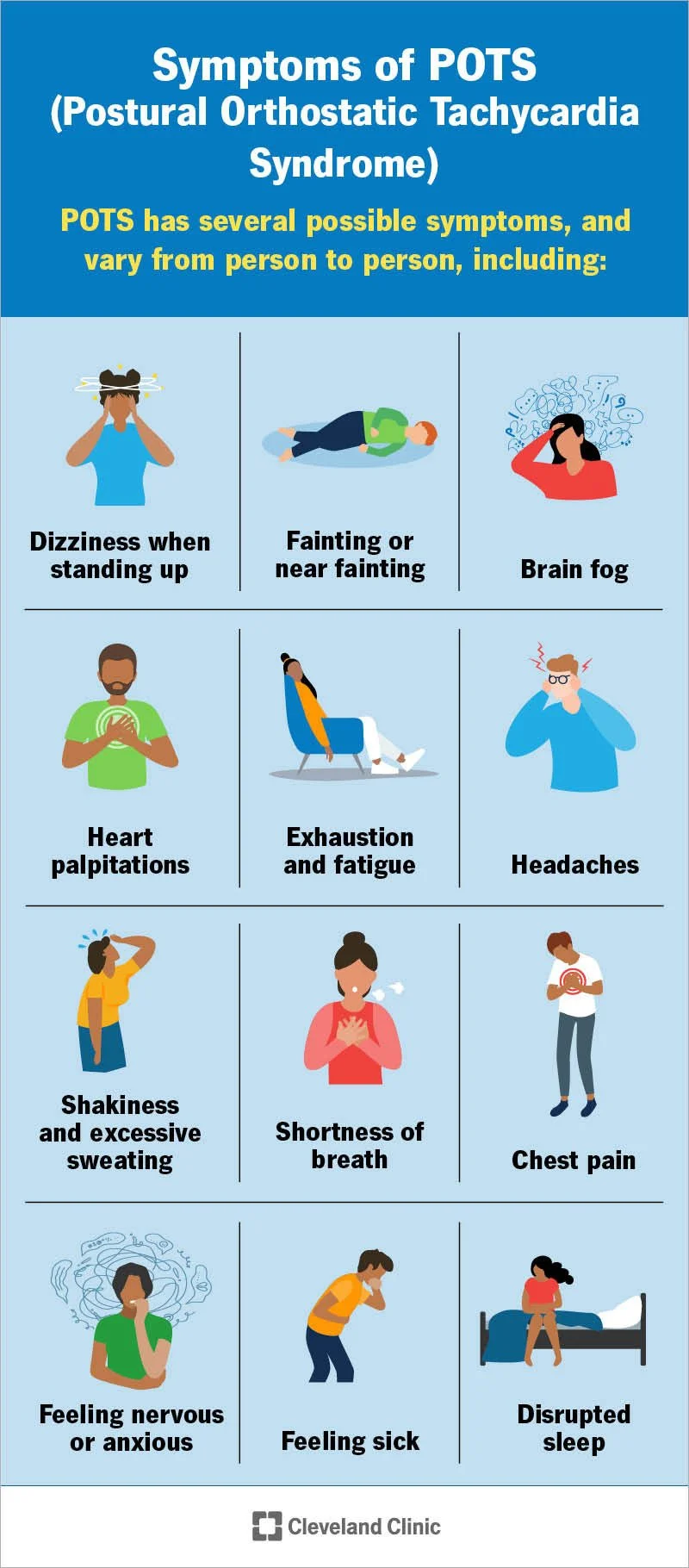
POTS and related dysautonomias frequently produce symptoms well beyond heart rate and dizziness, because the autonomic nervous system touches nearly every organ system:
Cardiovascular: rapid heart rate on standing, palpitations, lightheadedness, fainting or near-fainting
Neurological: brain fog, headache or migraine, coat hanger pain (neck and shoulder pain worsened by standing)
Gastrointestinal: nausea, bloating, constipation or diarrhea
Other: heat intolerance, fatigue, sleep disruption, and in many patients, symptoms resembling anxiety or attention difficulty
Anxiety-like symptoms in particular deserve a closer look. They often reflect genuine physiologic sympathetic activation rather than a primary psychiatric cause, though the relationship with anxiety appears to run in both directions rather than one clearly causing the other.
How is POTS diagnosed & my approach
My evaluation includes a supervised active stand test conducted over video, a comprehensive symptom history covering months to years rather than a single visit, and lab work to rule out other explanations. Baseline testing includes electrolytes, a complete blood count, thyroid function, and an ECG. Depending on presentation, I also consider autoimmune markers, iron studies, and cardiac rhythm monitoring, since POTS patients have measurably higher rates of autoimmune conditions and iron deficiency than the general population. I ask about joint hypermobility at every visit, since musculoskeletal screening for hypermobile features is part of recommended evaluation, and I discuss mast cell-related symptoms if a patient's presentation suggests it.
Evidence-based treatment approach
Current guidelines consistently identify structured exercise as first-line treatment, not medication. Programs such as the Levine protocol, and CHOP protocol for adolescent and young adult patients, use gradual, largely recumbent reconditioning to retrain how the body manages blood volume and circulation. This is paired with increased fluid and sodium intake, compression garments (often waist-high rather than just stockings, given abdominal blood pooling), and positional strategies to manage symptoms day to day.
Medication is added when nonpharmacologic measures alone aren't enough, chosen based on the patient's specific pattern, hyperadrenergic, hypovolemic, or neuropathic, rather than a one-size-fits-all prescription. Options include beta-blockers, ivabradine, midodrine, and fludrocortisone, depending on presentation. It's worth noting that every medication used for POTS is used off-label; none currently carries an FDA indication specific to POTS.

Associated conditions
The connection between POTS and joint hypermobility, including hEDS, is well documented, and musculoskeletal screening for hypermobile features is part of recommended evaluation. Hypermobility Spectrum Disorder can often be assessed via video; hEDS requires an in-person exam for formal diagnosis and is referred to rheumatology or genetics when suspected.
Small fiber neuropathy is found in a substantial portion of POTS patients who undergo specialized testing for it, though this testing typically doesn't change management in straightforward cases and is generally reserved for atypical or refractory presentations.
The relationship between POTS and Mast Cell Activation Syndrome is genuinely contested in the current literature. Reported overlap varies enormously across studies depending on which diagnostic criteria are used, and current reviews describe the evidence for a direct causative link as limited. Current guidance places mast cell-related testing among studies to consider in select clinical scenarios, flushing being a notable one, rather than part of a standard workup for every POTS patient. If a patient's symptom pattern raises this possibility, it's a reasonable thing to discuss and pursue further, but it reflects individualized clinical judgment rather than a universal diagnostic step.
What ongoing management looks like
POTS treatment is rarely resolved in a single visit, and I built this practice around that reality rather than around one-off evaluations.
After your initial evaluation and results visit, ongoing management includes monthly follow-up visits where we track your response to the exercise program, adjust medication as your symptoms change, and troubleshoot whatever isn't working yet. Between visits, you can message me directly with questions, so you're not saving up concerns for a once-a-month appointment or left wondering whether something needs attention sooner.
Exercise progression gets monitored closely, since pushing through the Levine or CHOP protocol too fast is one of the most common reasons patients stall out or relapse. I also watch for signs of post-exertional malaise (PEM) or an underlying condition like long COVID, both of which require a different, pacing-first approach rather than standard graded exercise, and I adjust the plan accordingly if that pattern shows up.
For patients who want continuity without paying for each visit individually, I offer ongoing care plans on a month-to-month, 3-month, or 6-month basis, which bundle follow-up visits together with between-visit messaging and priority scheduling. This tends to work well for patients who are actively titrating medication, progressing through an exercise program, or waiting on a specialist referral and want consistent support in the meantime.
If and when you're ready to transition to a specialist or your PCP for longer-term management, I coordinate that referral and provide a complete written summary of your evaluation and treatment course, so you're not starting over with someone new. Some patients stay in ongoing care with me long-term; others use this as a bridge until they're connected with the right specialist. Either way, you're not left managing a new diagnosis alone.
Access in Tennessee
Specialized autonomic testing centers are limited nationally, and Tennessee is no exception. Many patients report waiting months for evaluation at major academic centers, and some are seen once without ongoing follow-up care.
The active stand test itself is a validated, evidence-based diagnostic tool that requires only a blood pressure cuff and can reasonably be conducted outside a traditional clinic setting. No major consensus statement has specifically validated telehealth-delivered diagnosis as equivalent to in-person evaluation, and general telemedicine guidance notes that remote visits are not appropriate when a physical exam is essential to the clinical decision. For POTS evaluation, the active stand test relies primarily on vital sign monitoring rather than physical exam findings, which is part of why it lends itself reasonably well to a video-supervised format, though this delivery model itself remains a practical adaptation rather than a guideline-endorsed standard. Early outcomes data is encouraging: a 2026 study following pediatric patients with significant orthostatic intolerance through telemedicine follow-up over an average of nearly a year and a half found significant improvement in quality-of-life scores and reduced symptom burden. Telehealth follow-up allows evaluation and initial treatment to begin without the wait many patients face for in-person specialist access, while complex or refractory cases still benefit from in-person or specialist evaluation when appropriate.
Getting started
If you're experiencing symptoms consistent with POTS or dysautonomia, evaluation doesn't need to wait months. You can learn more about a POTS evaluation here, or book a visit to get started.